Entry 01
The Formation (1992)
Strategic Dehydration did not form so much as they accumulated. Darryl Fink, a twenty-three-year-old counter associate at Bergen County Auto Parts in Lodi, New Jersey, had been playing guitar since high school and had briefly been part of a cover band called The Arrangements, which dissolved in 1991 when the rhythm section relocated to Delaware. In January 1992, Fink placed a classified advertisement in the Hackensack Pennysaver seeking musicians for an original project. The advertisement read: "Guitarist seeks musicians for original project. No covers. Serious only. Call after 6." The phone number was his parents' landline. His mother took at least two of the calls.
Kevin Sprague, a twenty-one-year-old HVAC apprentice from Moonachie, responded on the first day. He described his influences in the reply as "the kind of stuff that sounds like it means something." He arrived at the first meeting with a single guitar case and a tuner.
Len Cabutti, who had grown up two houses from Sprague on Clair Avenue in Moonachie, came not because he had seen the advertisement but because Sprague told him about it. Cabutti played bass, had been playing since borrowing his older brother's instrument in 1986, and noted that his family's dry cleaning business was flexible enough to accommodate evening rehearsals.
Mike Droge was referred by Cabutti's brother-in-law Gary, who worked with Droge in the parts department at a Ford dealership in Carlstadt. Droge arrived at the first rehearsal fifteen minutes early and sat in his car until the designated start time.
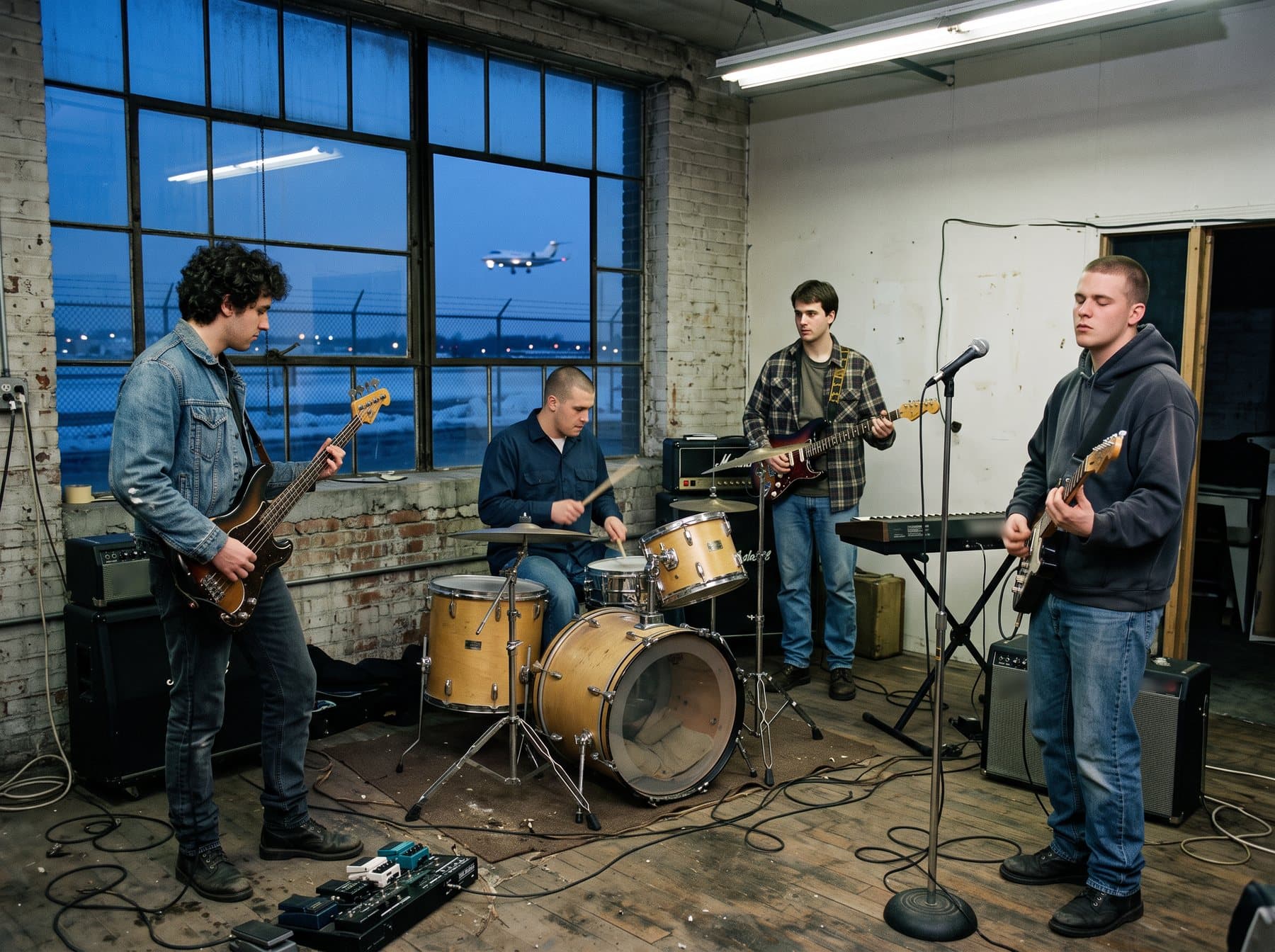
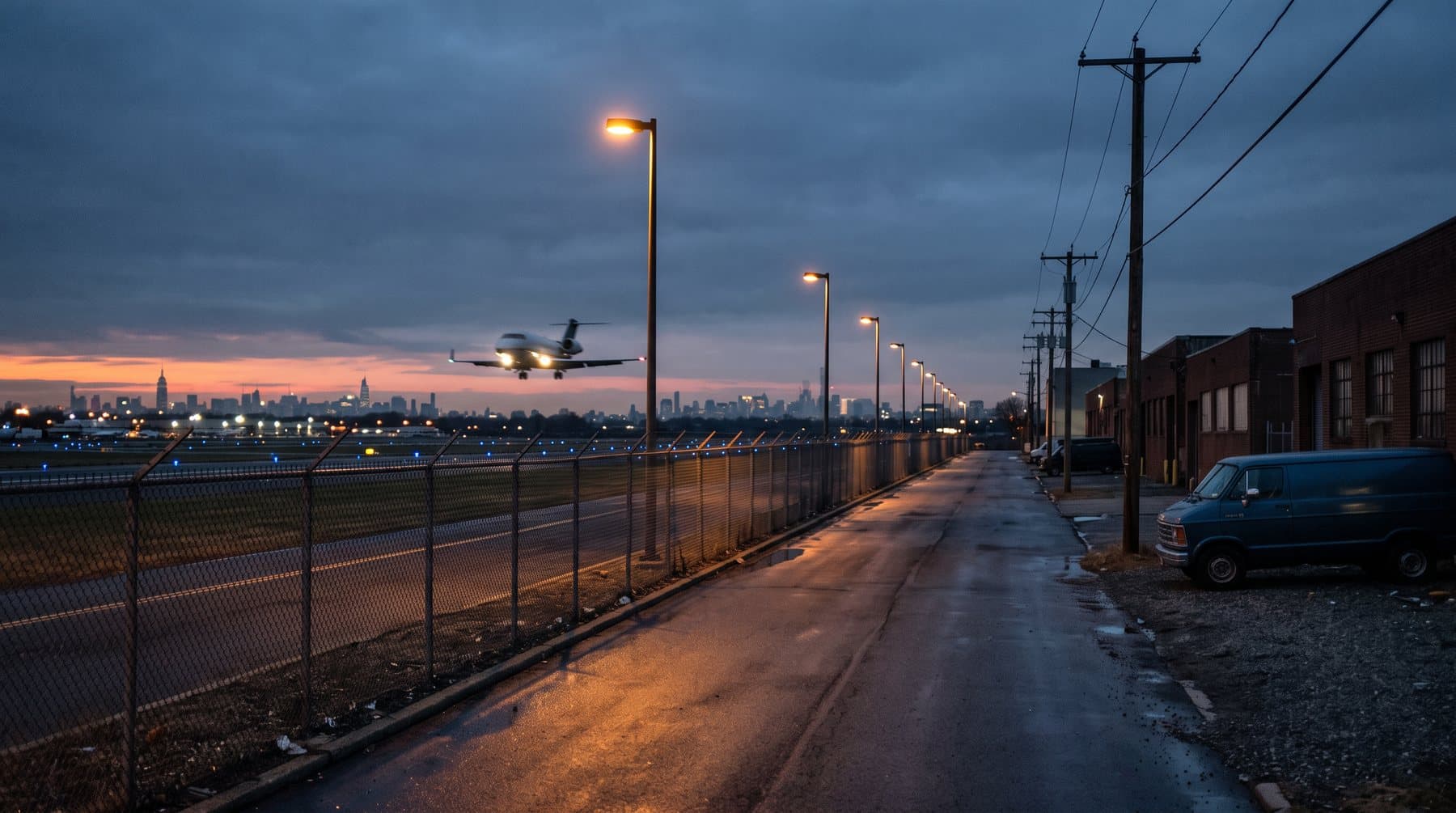
The band's first rehearsal took place on February 1, 1992, in a rented second-floor space at a converted warehouse on Orient Way in Moonachie — approximately 600 feet from the eastern perimeter fence of Teterboro Airport. The naming discussion took place at the end of that session. Fink suggested Strategic Dehydration. No one objected. The matter was not revisited.
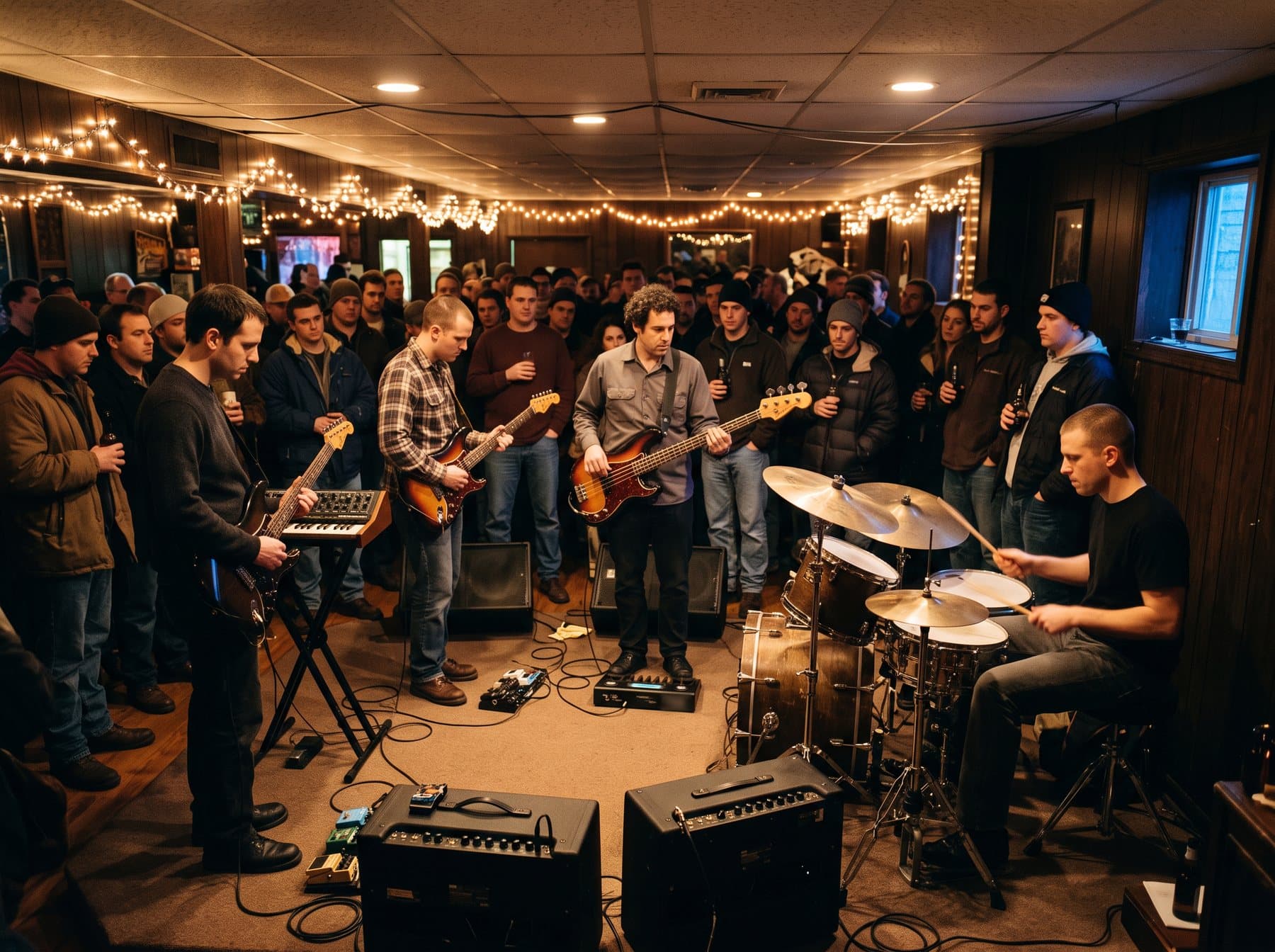
Their first performance was March 14, 1992, at the Rusty Nail Tavern in Hasbrouck Heights — a Thursday. They played nine songs, seven of which were original compositions. Twelve people attended. Two of them were waiting for someone who had not yet arrived.
Entry 02
Enough and the Early Years (1993–1994)
Strategic Dehydration spent their first year playing bars and small venues across Bergen and Passaic Counties — the Rusty Nail again, the VFW in Garfield, an acoustically challenging church basement in Saddle Brook, and a Friday-night slot at the Tick Tock Diner in Clifton that was discontinued after one appearance due to a misunderstanding about what "entertainment" meant in that context.
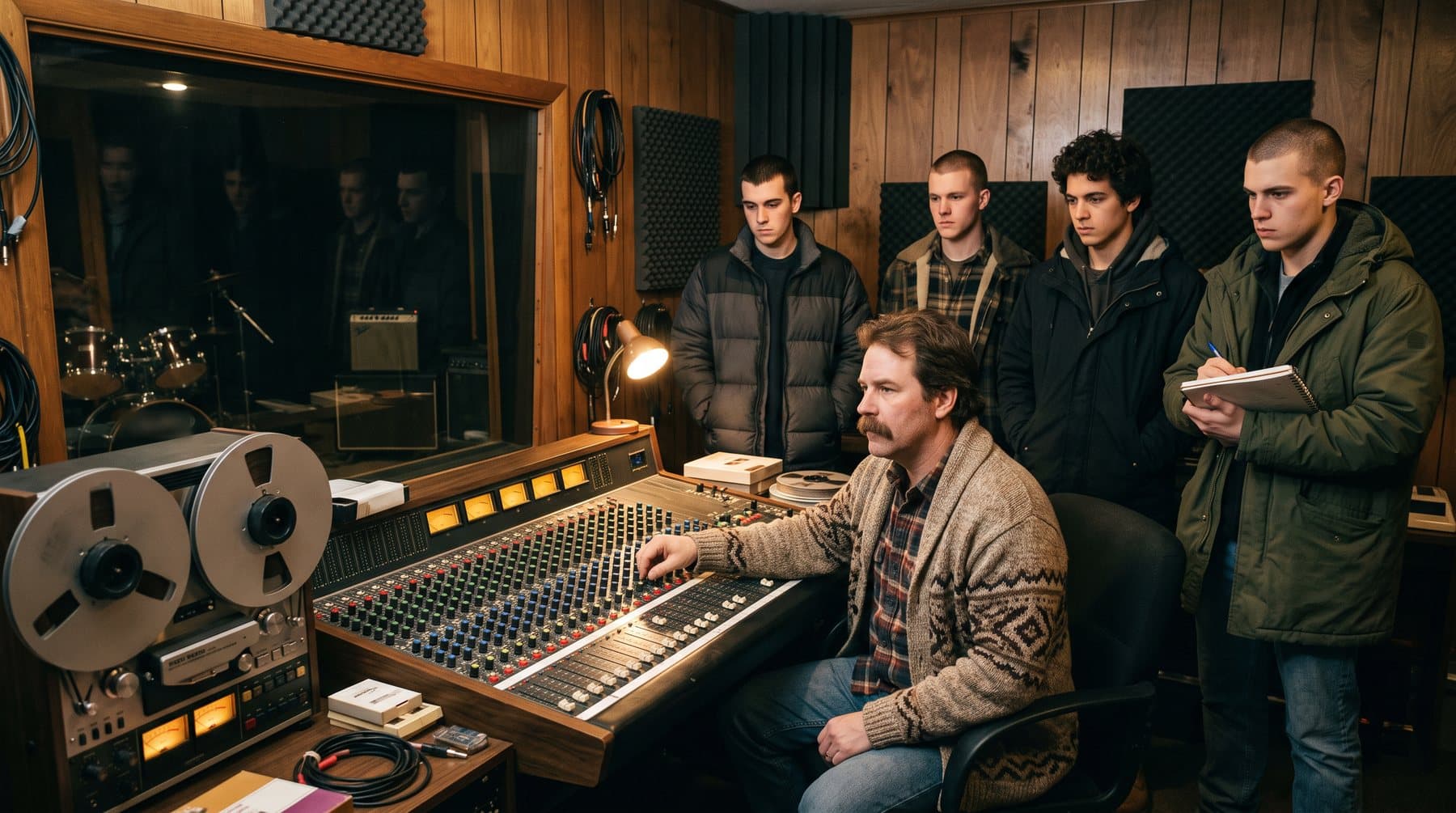
By fall of 1992, they had enough original material for an album. Recording began in January 1993 at Garden State Sound in Paramus, a sixteen-track studio operated by engineer Bob Trentini, who had worked with three other New Jersey bands, two of which had also been called something nobody could fully explain. Trentini described the sessions as "efficient." The band booked twelve days and used eleven. On the final day, Droge arrived at 8:47 a.m. for a 9:00 a.m. session.
Enough, the debut album, was released in April 1993 on Sideband Label. Ten tracks, thirty-seven minutes. The lead single, "Almost Home," received rotation on two New Jersey college radio stations — WFMU in East Orange and WRSU at Rutgers — and was described by a reviewer in the Rutgers Daily Targum as "the kind of song that feels like arriving somewhere you didn't realize you'd been heading." Fink read the review. He did not comment on it.
The album sold modestly. The band continued touring through 1993 and 1994, adding Pennsylvania and Connecticut to their circuit. Their van, a 1988 Ford Econoline owned and driven by Cabutti, logged over forty thousand miles in this period. Cabutti tracked every gallon of fuel in a small notebook. He submitted none of it for reimbursement.
Entry 03
The Touring Years and We're Still Here (1995–1997)
By 1995, Strategic Dehydration had extended their touring range considerably. Where the early years had been confined to the tri-state area, the band now made regular runs to Boston, Philadelphia, Washington D.C., and — beginning in spring 1995 — a series of cross-country legs to Chicago, St. Louis, Denver, and Los Angeles. The trips were long. The routing was direct. Cabutti planned each leg using a road atlas and the same yellow highlighter from 1993.
"We didn't stop unless we had to," Cabutti recalled in a 2001 interview with the New Jersey music blog The Brick City Dispatch. "Darryl preferred it that way." Fink did not dispute this. He noted that the routing was "practical."
The second album, We're Still Here, was recorded in November 1995 at Garden State Sound — again with Bob Trentini, who had by that point completed his plumber's licensing examination and was transitioning careers but agreed to do one more project with the band. The sessions ran over Thanksgiving weekend. Recording wrapped Sunday evening, two hours behind schedule. Trentini attributed the delay to "a single passage that would not sit right." Fink has not confirmed or denied this.
We're Still Here was released in February 1996. Eleven tracks, forty-one minutes. The lead single, "Weather Window," received brief attention on alternative radio in the Philadelphia market. A Philadelphia City Paper critic described it as "a song about timing that feels, somehow, like a song about flying." The band did not respond to requests for comment on this characterization.
Entry 04
The Long Way Home and the Dissolution (1998–2000)
The band entered 1998 with no announced plans to record a third album. Fink had mentioned in a November 1997 interview with a Bergen County alt-weekly that he had "some things written." He described them as being about "the end of something, or the possibility of the end of something, or just the feeling right before that." The interviewer asked if the band was breaking up. Fink said no. The band broke up two years later.
The Long Way Home was recorded in spring 1998 at Audio Workshop in Hackensack, as Garden State Sound had closed following Trentini's full transition to plumbing. The new engineer, a recent Berklee graduate named Seth Piraino, described the sessions as "very organized." He noted that the band arrived each day with detailed notes about what they intended to record. Droge's notes were written in a consistent format, organized by session block. "It was like a flight plan," Piraino said. He did not appear to mean anything by this.
The album was released in March 1999. Nine tracks, thirty-five minutes. Several reviewers called the title track's five minutes and forty-four seconds "resigned momentum." The Asbury Park Press gave the album three and a half stars and noted that Strategic Dehydration had "never been a band that explained themselves." This was accurate.
The band played their final show on December 30, 1999, at the Rusty Nail Tavern in Hasbrouck Heights — the same venue where they had played their first show nearly eight years prior. The return engagement was not announced as a farewell. After the show, Droge loaded his drum kit into Cabutti's van, which Cabutti drove to Droge's house in Wood-Ridge. Fink and Sprague drove separately. Nobody said it was the last show. In March 2000, Fink sent a brief email to the other three members. The archive does not have the text of that email. The band did not record again.